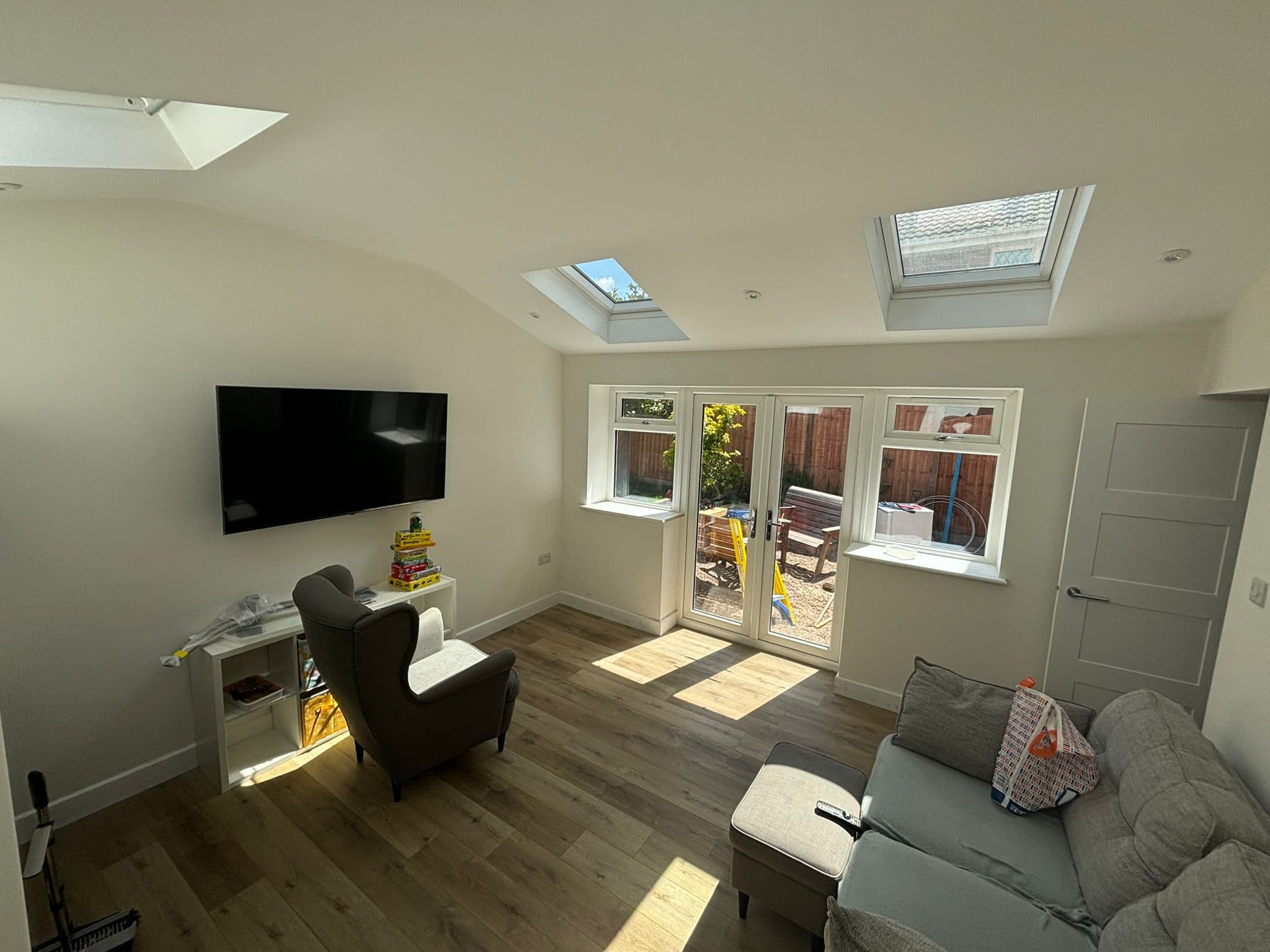
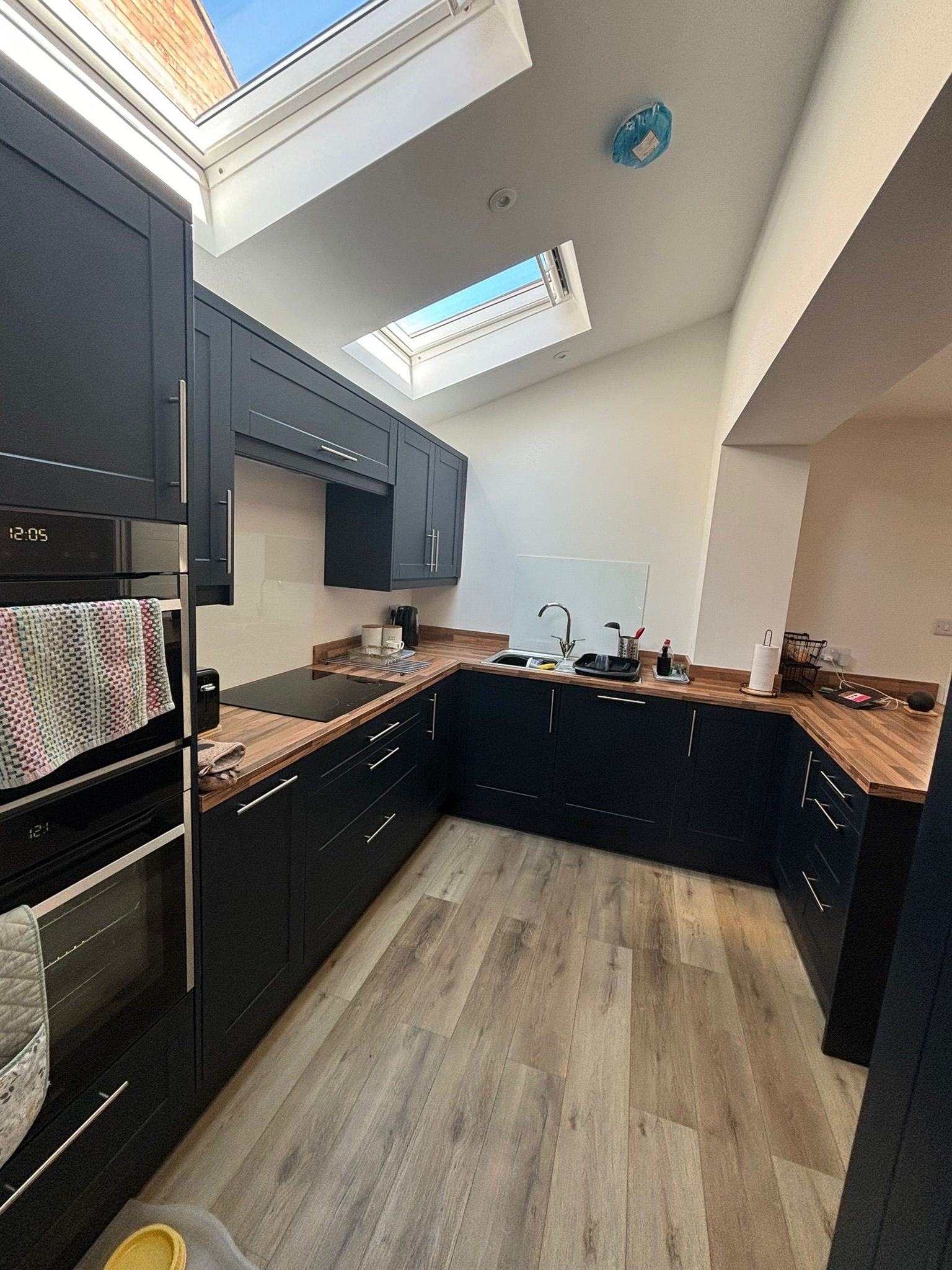
One of the first decisions homeowners face is whether to go single-storey or double-storey. The wrong choice can leave you spending 30% more than necessary, or with a finished extension that does not solve the original problem. This guide gives you a clear, side-by-side comparison based on real 2026 builds across Worcestershire and the West Midlands.
The short answer
If you need more ground-floor living space — bigger kitchen, family room, open-plan area — single-storey is almost always the right call. If you need more bedrooms and bathrooms upstairs as well, double-storey makes financial sense because the foundations and roof are shared. The exception: if the upstairs need is small (one bedroom, one bathroom), a loft conversion may be cheaper still.
Converting a single storey extension to double
Plenty of homeowners come to us with a single-storey extension already on the back or side of the house, wanting to know whether a second storey can be added on top rather than starting again. Sometimes it can. The deciding factor is almost always what sits underneath, because the existing foundations and walls have to carry the extra load, and most single-storey extensions were never designed with that in mind. The first step is a structural engineer digging a trial hole to check the depth and width of the existing footings and the ground conditions around them. Where the footings are shallow, underpinning or new pad foundations may be needed, and that is usually the biggest cost variable on this type of job.
Expect a full planning application rather than permitted development, plus Building Regulations approval covering the new floor structure, stairs or landing access, fire escape routes and insulation upgrades. You also need to think about how the new upstairs space joins the existing first floor, which often means altering a bedroom wall or reworking a landing. Converting an existing single-storey extension generally works out cheaper per square metre than demolishing and rebuilding, but only once the engineer confirms the existing structure is up to the job. If it is not, taking the extension down and rebuilding it as a two-storey can be the more sensible route.
Cost comparison
Per square metre, double-storey is roughly 30–40% better value than the equivalent single-storey footprint because the most expensive elements (foundations, roof structure) are spread across two floors. Real 2026 cost ranges in Worcestershire:
- Single-storey rear (15–25m²): £35,000 – £55,000 (£2,200 – £2,400 per m²)
- Double-storey rear (25–40m² total): £75,000 – £115,000 (£1,800 – £2,100 per m²)
- Single-storey side (10–20m²): £28,000 – £50,000 (£2,300 – £2,500 per m²)
- Double-storey side (20–30m² per floor): £75,000 – £125,000 (£1,800 – £2,100 per m²)
On a like-for-like footprint, a double-storey extension typically costs around 50–60% more than a single-storey, but delivers exactly double the floor area. The maths only works if you genuinely need both floors.
Planning permission
This is one of the biggest practical differences:
- Single-storey rear extensions: often fall under Permitted Development. No formal planning application needed if size limits are met.
- Double-storey extensions: almost always need full planning permission. Two-storey rear extensions are not covered by standard Permitted Development.
- Two-storey extensions in Worcestershire typically need 8–12 weeks of council assessment plus a 21-day neighbour consultation period.
A double-storey build can add 3–4 months to the timeline before any work even starts. If you need the space quickly, this matters.
Disruption to your home
Single-storey extensions affect mainly the ground floor. The upper floors and bedrooms are largely undisturbed. You can typically live in the property throughout the build, except for the few days of knock-through.
Double-storey extensions are noticeably more disruptive. Roof works affect existing bedrooms; structural openings between old and new upper floors create dust and noise across the whole house. Many clients move out for 2–3 weeks during the most intense phase.
Impact on property value
In Worcestershire, average value uplifts based on 2025–2026 market data:
- Single-storey kitchen extension: typically adds 10–20% to property value
- Single-storey rear (non-kitchen): typically adds 8–12%
- Double-storey rear adding a bedroom + bathroom: typically adds 15–25%
- Double-storey side extension: typically adds 12–20%
Higher-value properties (around Hagley, Barnt Green, parts of Worcester) see stronger uplifts because the relative cost of the build is lower against the property value.
When single-storey is the right choice
- You want a bigger kitchen-diner or open-plan family living area
- Your upstairs already has enough bedrooms for your needs
- Your plot extends comfortably out the back or side
- You want to keep the project under £55,000
- You want to avoid full planning if possible
- You want to live in the property throughout the build
When double-storey is the right choice
- You need both more living space AND more bedrooms or bathrooms
- You are planning to stay 5+ years (long enough to recoup the investment)
- Your current house is comfortably below the local ceiling price
- You are happy to wait 12–16 weeks for planning approval
- Your existing roof is in good condition or due replacement anyway
- You have access for scaffolding and crane lifts of steelwork
The third option: loft conversion
If you mainly need an extra bedroom and possibly an ensuite, a loft conversion is often the smartest choice. Costs in Worcestershire typically run £35,000–£75,000 — comparable to or less than a single-storey extension, with no impact on garden space and no planning permission needed for most rear dormer conversions.
Get a clear recommendation for your project
Every property and family situation is different. A free site visit lets us walk you through the realistic options and costs for your home. Call 07769 225120 or use the contact form.